Syllabus for
Physics 110 -- Mechanics
Course description
Physics is the study of the physical world--a rather broad topic! Physicists are interested in phenomena ranging from the smallest constituents of matter to the origin of the cosmos, as well as pretty nearly every state or organization of matter or energy between these extremes. In order to make any progress in studying such a variety of systems of different complexities, sizes, and energy scales, physicists try to look for simple underlying principles. In a nutshell, the goal of physics is to understand all phenomena in terms of a small set of principles.
In this course, we will consider the most fundamental branch of physics, called classical mechanics or the study of motion. Since ours is a world of constant motion, classical mechanics is the basis for other fields of physics as well as chemistry, biology, and engineering. But besides its being useful, the study of motion can be appreciated by everyone for being one of the most beautiful achievements of human intelligence.
We will begin our exploration of
mechanics by defining the basic concepts of distance, velocity, and
acceleration, learning a language suited for the precise description of
motion. We will then inquire into the causes
of motion,
encountering forces and
Throughout the course, we will concentrate on developing two kinds of skills: (1) an intuitive, qualitative understanding of phenomena, and (2) quantitative reasoning and problem solving. Problem solving is a very important part of the course, and it is certainly one of my goals to convince you that thinking hard about a puzzle in physics can be a lot of fun. Also, solving problems is the only sure-fire way to make certain that you truly understand an idea, and many of the ideas in this course are somewhat deeper than they appear at first glance. The laboratory component is another important part of the course, allowing for some hands-on experience (and tinkering) with mechanical systems, which is an excellent way to develop intuition.
A brief word about the next courses
in the sequence: Physics 120 considers three important
phenomena--heat,
waves, and light--which appear quite distinct, but, like so many ideas
in
physics, are subtly and beautifully interrelated. Electricity
and
magnetism, both involving the important concept of the field,
are
principal topics of Physics 130. Modern Physics (Physics 205)
follows
with a look into Einstein's special theory of relativity, quantum
mechanics,
and an introduction to atomic and nuclear physics.
Class Meetings
Section 1: MTuThF 1st period, D108 SMC.
Section 2: MTuThF 3rd period, D108 SMC.
Instructor
Section 1: Mark Shroyer, Office: D109 SMC, ext. 7847, mshroyer@knox.edu
Section 2: Tom Moses, Office: D116 SMC, ext. 7341 , tmoses@knox.edu
Text
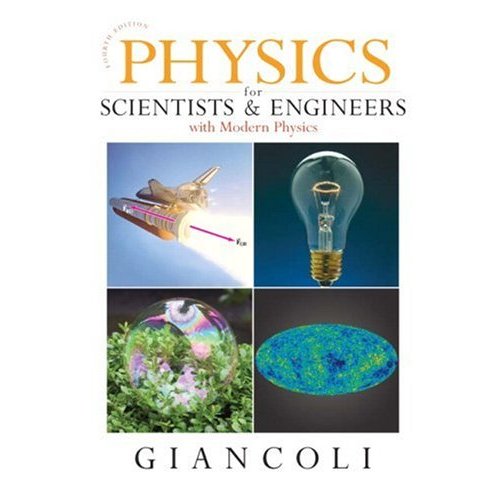
Douglas C. Giancoli,
Physics
for Scientists and Engineers, 4th ed. (Prentice-Hall,
Homework
Homework problems will be available on-line, due on Mondays
and Thursdays (usually). The homework web page displays the
problems, with individually-customized random numerical parameters for
each
student, provides hints if requested, and gives instant feedback by
telling you
when your answer is correct. For full credit, homework sets
are due by
Working out the homework problems is probably the single most important aspect of the course for learning physics. It is in the effort to understand specific problems that you make real progress is in your understanding. You are encouraged to work together in groups on the homework problems; you may consult other books or people, and you should especially feel free to consult your instructor if you have trouble with any problem.
Honor Code, Internet Solutions, and AI (Artificial Intelligence Software)
You are expected to abide by the Knox
College Honor Code.
You may work together in groups to discuss and solve problems related to the homework problems and lab reports. In writing up your lab reports and calculating final solutions on the problem sets, each person must do his or her own work. The use of online homework aids or solution manuals is prohibited. Duplicate lab reports are not allowed, even by lab partners. You may share data with your lab partner only if both of you were present in the lab together collecting the data. You many not share any text written as part of your lab report.
The use of online homework aids and
solution manuals is prohibited.
You additionally are
not allowed to use AI (for example, chatGPT) to seek solutions to point
bearing
work (homework problems, lab reports, quizzes, and exams).
Doing so is a
violation of the Honor Code as you are presenting work that is not
yours for credit.
Additionally, while AI might effectively solve some of the problems
we’ll encounter, relying on it deprives you of the
opportunity to learn the underlying principles of physics. The purpose
of problem-solving is to help you learn the process, which often
involves working through challenges and making mistakes and learning
from them. Therefore, solutions provided by AI or other internet
sources are not appropriate to submit or use.
However, this does not mean that you can never use AI in relation to
the class. You may use AI to clarify content and assist with
understanding (but not for homework problems, lab reports, quizzes,
and exams). Always keep in mind, though, that AI frequently
makes errors in physics, particularly with mathematics, so use it
cautiously and critically. It is a poor substitute for speaking to your
professor!
As always, if you
are unsure if something is allowed, please ask!
Attendance and Make-Up Policy
Class attendance is required, and unexcused absences may trigger deductions from the course average. Up to 3 absences can be excused, by reporting the absence and the reason for it before the beginning of class. Only students with excused absences are allowed to make up a missed quiz or exam.
Labs
Laboratory sessions will be held every Wednesday in SMC D105 (across the hall from the classroom). Information for the laboratory component is included in the lab manual that will be distributed to you during at the start of the term. You need to read over the lab manual and any lab instructions before each lab meeting.
Lab instructor: Prof. Tom Moses.
Lab Report Due Date
Friday 4:00 pm, following the lab on Wednesdays. Reports should be submitted in the box across the hall from the laboratory.
Late Policy
Late labs get a 10% deduction per (business) day. Homework sets may be completed for half credit up to one week late. Naturally, special arrangements can be made (in advance, whenever possible) for sports competitions, illness, etc. As usual in science courses, it is absolutely vital not to fall behind in the homework.
For more details regarding lab, see
the
Lab Home Page
Exams
There will be two mid-term exams and a comprehensive final exam, as well as periodic small quizzes.
Exam 1 Friday, Oct. 10
Exam 2 Tuesday, Nov. 4
Final exam
Grade Weighting
| Homework | 15% |
| Labs | 15% |
| Midterm exams | 35% total (17.5% each) |
| Quizzes | 10% |
| Final exam | 25% |
Approximate Calendar
| Week | Topic | Reading |
| 1 | Kinematics | Ch 1, 2 |
| 2, 3 | Force vectors, Newton's laws | Ch 3, 4 |
| 4 | Applications of Newton's laws | Ch 4, 5 |
| Exam 1 | ||
| 5 | Friction, circular motion | Ch 5 |
| 6 | Projectile motion, work, kinetic energy | Ch 3, 7 |
| 7 | Potential energy, conservation of energy | Ch 8 |
| Exam 2 | ||
| 8 | Linear momentum, collisions | Ch 9 |
| 9 | Rotational dynamics, angular momentum | Ch 10 |
| 10 | Gravitation | Ch 6 |
| Final exam | ||